More than half the Shilajit sold online in India is adulterated. Here's how to tell the difference in five minutes, with nothing but a glass of warm water.
Shilajit has exploded in popularity — and so have fakes. Tar, bitumen and even molasses are sold as 'pure Himalayan resin'. The good news: real Shilajit has properties that fakes simply can't copy.
1. The water test
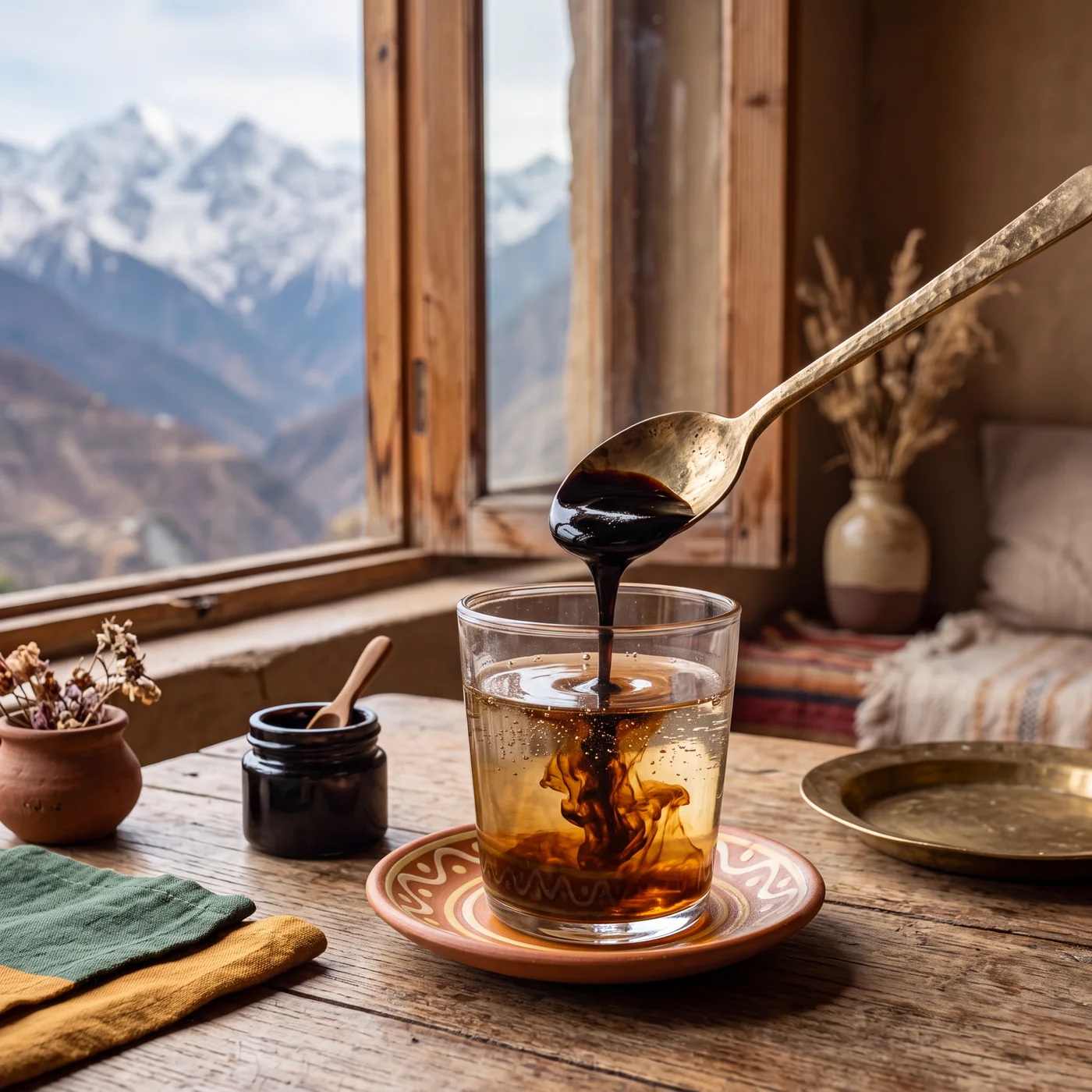
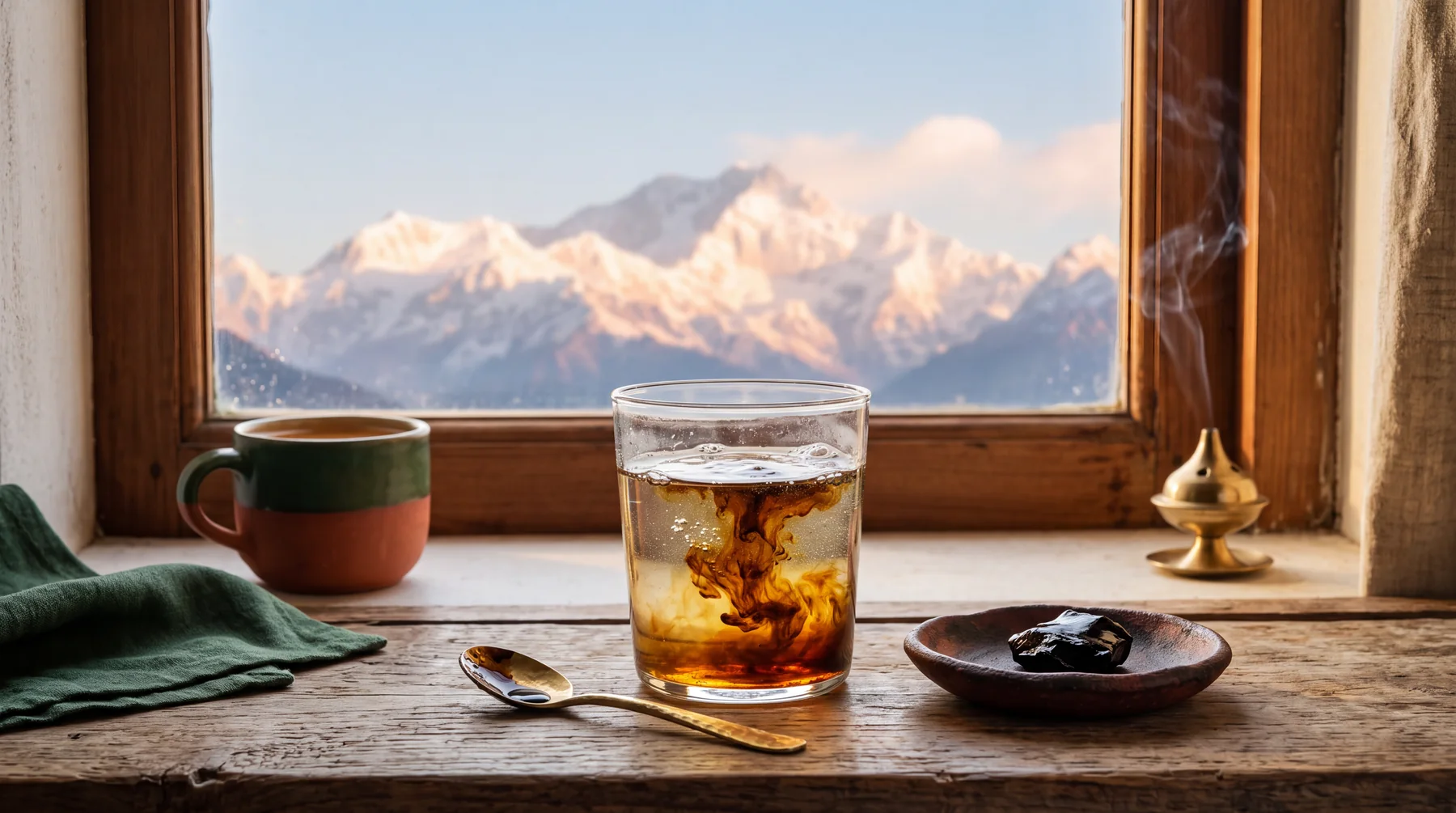
Drop a pea-sized piece into warm water. Real Shilajit dissolves completely within 5 minutes, turning the water golden-brown with no residue at the bottom. Fakes leave sludge or float.
2. The temperature test
Put your Shilajit in the fridge for 10 minutes. It should become hard and brittle — you should be able to snap it. Hold it in your palm and it softens again. This reversible behaviour is characteristic of genuine resin.
3. The flame test
Real Shilajit does not catch fire. It may bubble but will not burn with a flame. Adulterated products often contain combustible material.
4. The smell
Genuine Shilajit smells earthy and smoky — like wet soil and cow-dung smoke. A sweet or chemical smell is a red flag.
5. The lab report
Ask for a Certificate of Analysis showing fulvic acid content (should be above 50%) and heavy-metal clearance. A trustworthy brand will share it gladly.
The bottom line
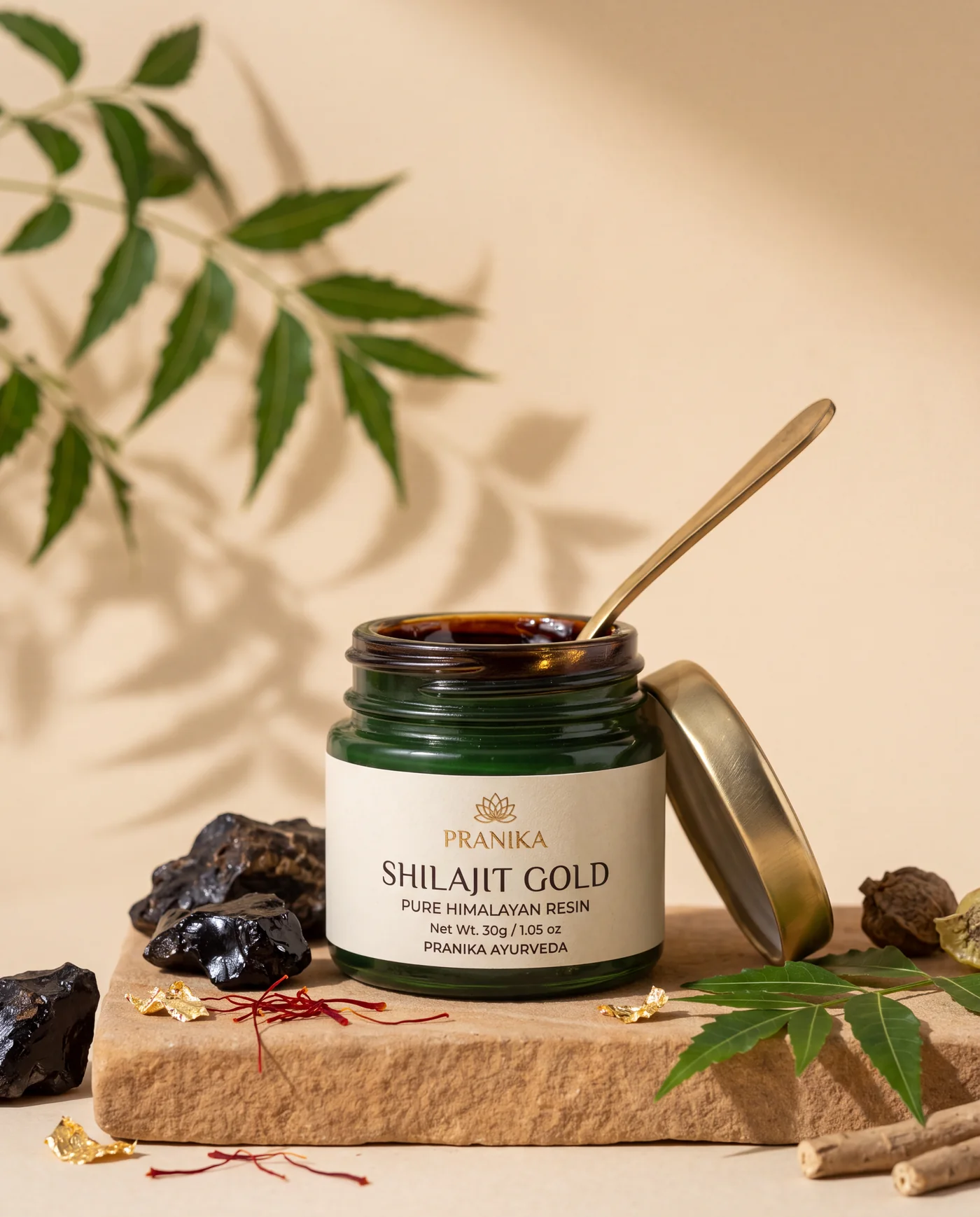
Pay for tested, purified Shilajit. Unpurified or fake Shilajit is not just ineffective — it can be harmful. Our Shilajit Gold Resin is tested for every batch and reports are available on request.